
ADG-Paris
 

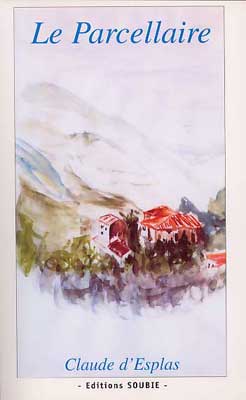
Le Parcellaire

 
Le Parcellaire Content : . La Bastide de Sérou, rue d'Arize - Foix - 14 July
. La Tour Lafont - Pamiers -18 July
. Giant chestnut trees - Le Temps des Cerises - The wild Boar - Land Parcel 234-235, 21 July
. Faydit de Brouzenac - 22 July
. Mr de la Bastide
. Apple-trees, Notre Dame de Sabart, Land Parcel 20, 8 August
. Mr l’Escoussière, Land Parcels 228, 229, 242, 251, 9 August
. Mimine at Eychenat
. From one mill to another ...
. Mélanie of the Goats, 11th August
. The Knight of the ferruginous waters, Baron of Alzen
. The black bicycle
. Land Parcels 169, 172,12 August - The Arize / Mr Fallacy
. Land Parcels 229, 234, 228, 13 August - Mr L'Escoussière / Norbert Casteret
. Land Parcels 58, 78, 79, 14 August - Pompeia Primilla
. Parcels 52, 54 - Carrier Pigeons
. Land Parcel 640, 15 August - The Land Parcel of God
. The Colonel Bravadida
. Honoré d'Urfé - L'Astrée - Bathylle - Leda - Mr L'Escoussière - 26 July, Land Parcel 88
. Xanthippe and Socrates - The Pear-trees - Land Parcel 85 bis, 27 July
. The Fountain-basin-wash house - Land Parcel 1002, 28 July
. The Garum - La Balmo - Land Parcel 998
. Pierre Bayle - Toulouse Lautrec - Yvette Guilbert - Wednesday 30 July, Land Parcels 1017/1018
. Abbé Breuil - Father Teilhard de Chardin - Prehistory - Elohin, Jahwe, God of Pity - Land Parcel 104, 1 August
. A miner's pick - 2 August
. The Wild Boar - 2 August
. Mr Fallacy - Land Parcels 87, 88, 89, 3 August
. La Madelon - La Der-des-Ders (1914-1918) - Mr Limebrick - Massat - 4 August
. The Farrier - Land Parcel 1002, 5 August
. The Blacksmith - Mr Irjava-scriptter - Pepi'Stieni- Land Parcel 87, 7 August
. The Mill of Malarnaud
. Festos de Fouix (Festival of Foix), 8 September
English
French
German


From one mill to another ...


Proceeding from Cussou Mill to that of Estaniels, one comes past the barns of great-uncle Cartou de la Rivière who had hidden there a case of gold-pieces, prize of the misfortune of a miner’s existence, a small fortune flown away for him one day, for ever, but which undoubtedly caused happiness to some gold-washer in the neighbourhood.
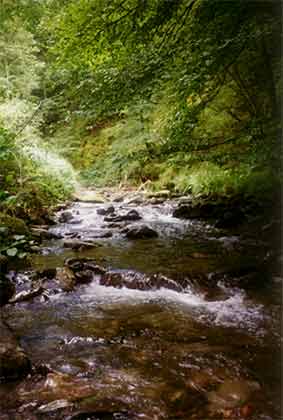
There, the Arize glides through juicy meadows, its riverains twisted by fog and rhumatism, a nuisance much regretted by the young miller, the one who caught the black trout with his hands, who picked the corn cob by moonshine, with the badger’s beard, who had his pockets burst with secular chestnuts and who hid in the hedges to overhear ladies’ conversation: this “Müller” run to seed, who, once a prisoner in Austria (oh Schubert!), found himself working in a knife-factory where his zeal did not attract attention particularly, at the same time falling in love with his landlady’s daughter whose “distant love” he cultivated when back in his own country, in addition to two or three local trifles without importance.
Helmeted like a “Panzer” commander, he ran around the little roads of the Séronais by moped in order to visit the fairs of the neighbouring villages, or, in fine weather, those of Foix impeccably recorded in the Almanac Patois published by the Printer in rue Labistour.

In the remainder of the week he sawed the logs for winter, sat down for his meals at fixed hours, warmed himself by the chimney corner, stoking up the embers of the vast fire-place, read novels and the press (obituaries), attended the meetings of the municipal council where Monsieur l’Escoussière never wanted to enthrone him, bragged about being able to topple over the “Picarde” and the “Quincampoix-la-Foldingue” as surely as he turned over the clods of “Lady Chatterley”’s garden, the one across the road, reminisced about the three Ménets, Lords of the Castet de Toch and their children: Marie de Montespan, Victor de Pau, Baptiste d’Aspet, Joseph du Mas, Jean de Toch, Louise de Maintenon, who sometimes stopped for a chat with him before tackling the steep path which leads to the “goulérou” and to the estate of Joseph de la Fourche, which then passes under the pub-balcony and along the yard of the beautiful School frequented by them all, girls and boys, to finally reach the Church and the small hillside cemetery where “Fleur de Farine” (petname given by his first school mistress) has had a tomb erected, crowning emblem of a life of semi-labour at the service of the hazards of uncertainty, common lot of those who did not want to, or were unable to, court the smart walls and the gold of the République, as he himself was pleased to stress, his eyes shining with malice.

“Vos coatara ! ... n’a coatat més d’uno !” (he will coete you, he has coeted more than one !), was the charitable conclusion of Mariotto de l’Oustalot whose daughter, notwithstanding, had copied 500 times under her school master’s strict rule:” I shall not listen to the cheating couillons ...”


Pastourelle

Jasotte de l’Oustalote puts her hand to her pants
and withdraws it screaming;
While she was chatting, would you believe it,
under her frock a biting slug had passed.

Claude d’Esplas (Le Parcellaire)

Translation : Dagmar Coward Kuschke (Tübingen)

All rights reserved


ADG-Paris © 2005-2024  -  Sitemap